Keyek Universal Identity
Universal Identity:
The Keyek ID provided by Keyek serves as a universal digital identity that can be used across various systems and platforms.
Complex Relationship Structure:
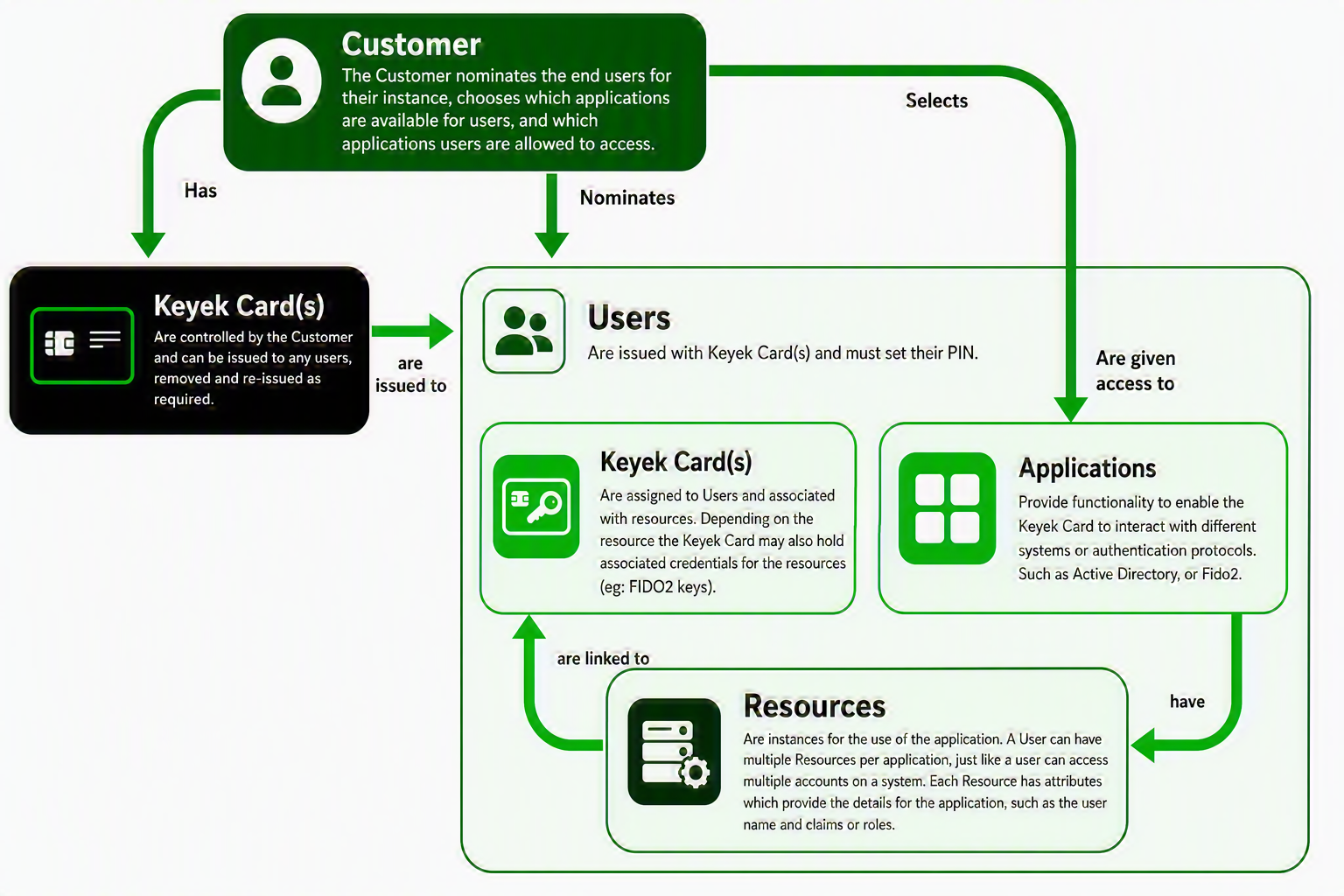
The relationship between a user, their assigned Keyek Card(s), and the systems the Keyek Card can authenticate is multifaceted. Keyek supports a flexible many-to-many-to-many relationships model, offering granular control at each step.
Device and Platform Flexibility:
-
Keyek Cards are not tied to a single device, system, or platform.
-
A user can use a single Keyek Card to access multiple accounts and
-
Multiple Keyek Card users can log into the same device.
ID Generation in Bureau of ID (BoID):
When a user is created in the Keyek system, a VeroID is generated in the Bureau of ID (BolD), which acts as a central hub for consolidating identities from other systems. This allows users to access any application integrated with Keyek using their Keyek Card and PIN.

Keyek ID Core Elements
The core elements to the structure of the VeroID and the relationship between them is explained below:
A Customer manages their Keyek instance and determines who can become an End User.
-
Keyek Cards are supplied to the Customer for allocation to End Users. Keyek Cards can exist without being assigned to any user, making them available for future assignment.
-
A Keyek Card can only be assigned to one user at a time.
-
A User can have multiple Keyek Cards assigned to them simultaneously.
-
-
Applications can be made available to a Customer’s Instance.
-
The Customer Administrator can assign these applications to individual Users.
Examples of such applications include Active Directory or FIDO2. -
Each Application can have multiple Resources.
-
Resources contain data linked to a user's account and can be assigned to multiple Keyek Cards.
-
-